What to Expect from Your Baby's Nappies
Wet nappies, dirty nappies and what's normal in the first few days
Your baby's nappies can tell you a surprising amount about how feeding is going and how they're adapting to life outside the womb.
In the first few days after birth, it's completely normal for both the number of nappies and the appearance of your baby's poo to change as feeding becomes established.
Understanding what's normal can help reassure you that your baby is getting enough milk, whilst also helping you recognise when it may be worth seeking advice.
Wet nappies
As your baby takes in more milk, you should notice the number of wet nappies gradually increasing.
A general guide
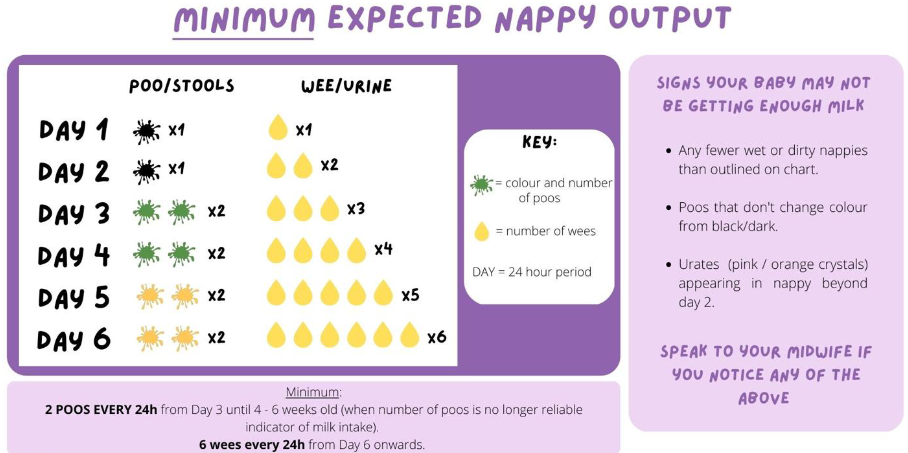
Day 1: At least 1 wet nappy
Day 2: At least 2 wet nappies
Day 3: At least 3 wet nappies
Day 4: At least 4 wet nappies
Day 5 onwards: 6 or more heavy wet nappies every 24 hours
The urine should become pale in colour. If you notice dark orange
or red staining ("brick dust") after the first couple of days, or fewer wet nappies than expected, speak to your midwife or healthcare professional.
Dirty nappies
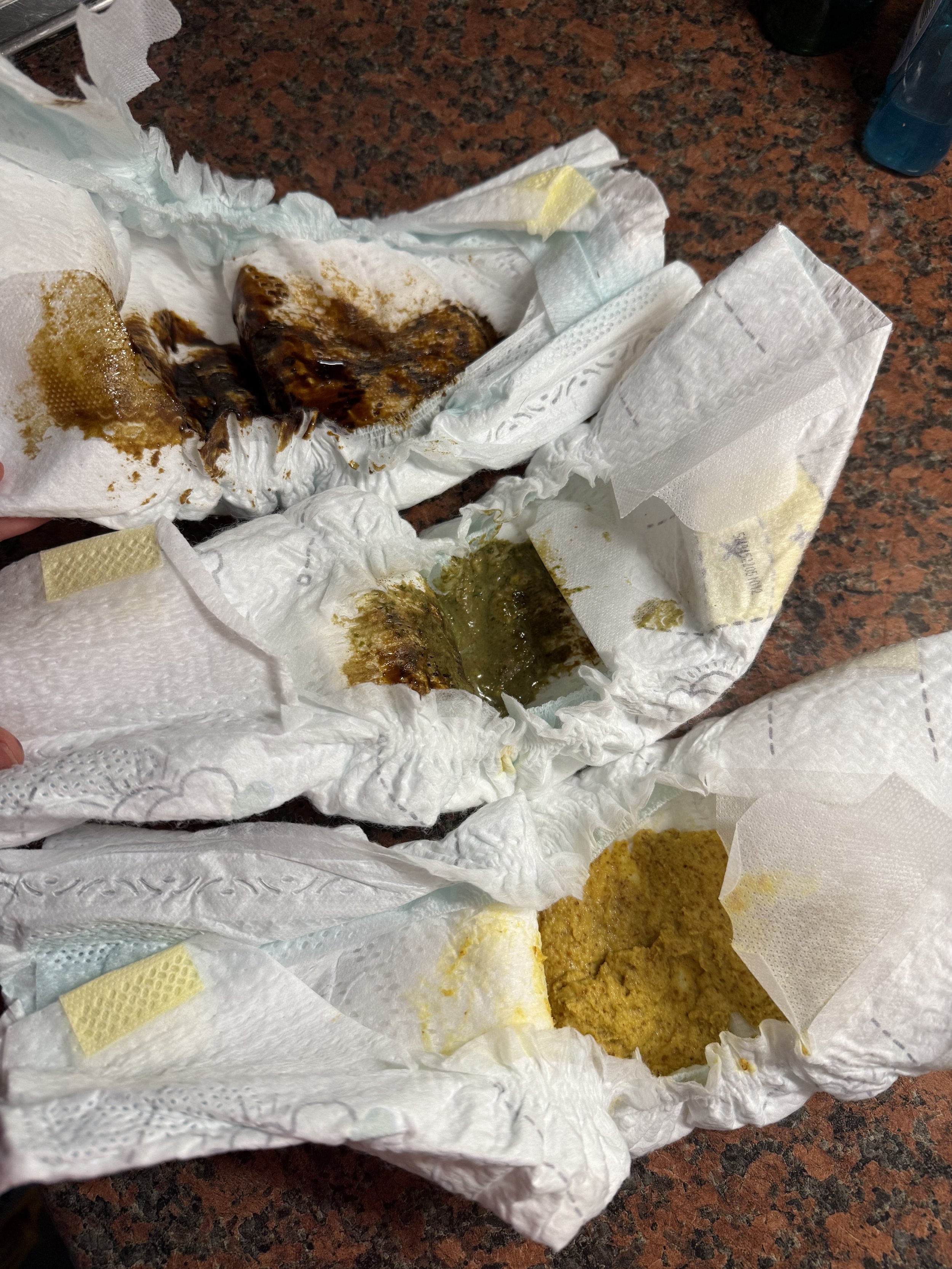
Your baby's first poo is called meconium.
It is thick, sticky and black or very dark green. As feeding becomes established, the poo gradually
changes in colour and consistency.
You can generally expect:
🖤 Days 1–2: Thick, black or very dark green meconium
💚 Days 3–4: Green or greeny-brown transitional stools
💛 From around Day 4–5 onwards (breastfed babies): Mustard yellow, loose or seedy stools
Formula-fed babies often have stools that are slightly firmer and more yellow-brown in colour.
Infant Dyschezia - When Your Baby Struggles to Poo
Many new parents become worried when their baby appears to strain, go red in the face, cry or grunt for several minutes before passing a soft poo.
Although it can look uncomfortable, this is often infant dyschezia, a completely normal developmental phase in young babies.
Babies are still learning how to coordinate the muscles needed to pass a stool. They need to relax their pelvic floor whilst increasing pressure in their tummy—but this takes practice.
You may notice your baby:
• Straining or grunting for 10–20 minutes before a poo
• Going red in the face
• Pulling up their legs
• Crying before passing a stool
Once the poo is passed, they usually settle quickly.
The important thing is that the stool itself is soft. If your baby is passing soft stools, this is not constipation and treatment is not usually needed.
As difficult as it can be to watch, try to allow your baby to work it out independently rather than routinely using rectal stimulation or laxatives, unless advised by a healthcare professional.
Most babies grow out of infant dyschezia within a few weeks as they learn to coordinate these muscles.
When should I seek advice?
Please contact your midwife, health visitor or GP if:
• your baby isn't producing the expected number of wet nappies
• meconium has not been passed within the first 24 hours
• stools remain black after the first few days
• your baby's poo is white, chalky or pale grey (this should always be assessed urgently)
• your baby's stools are consistently hard, dry or pellet-like
• there is blood in the stool (other than a tiny streak associated with a small anal fissure)
• your baby has a swollen tummy, is vomiting, seems unwell or is difficult to wake
• you have concerns about feeding or your baby's weight